
Annapolis, Maryland

Head & Neck Skin Cancer (Mohs) Reconstruction

Introduction to Head & Neck Skin Cancer (Mohs) Reconstruction

A diagnosis of skin cancer on the face, head, or neck can feel overwhelming, especially when treatment requires surgery that affects your appearance. While Mohs surgery is one of the most precise and effective ways to remove skin cancer, it often leaves a defect that needs careful reconstruction to restore both function and aesthetics. At Ann Arundel Facial Plastic Surgery, Dr. Brandon Wachal and Dr. Lee A. Kleiman specializes in head and neck skin cancer reconstruction, offering patients in Maryland compassionate care and advanced surgical expertise. Their goal is not only to help you heal physically but also to restore your confidence with results that look as natural as possible.

Two surgeons, Dr. Washal (left) and Dr. Lee (right), wearing light blue surgical scrubs, masks, caps, and gloves, perform a reconstructive procedure on a patient lying face-up on an operating table. Dr. Lee is also wearing a surgical headlamp. The operating room is dimly lit except for the intense, focused illumination from the large overhead surgical lights directly above the patient. - Head Neck Skin Cancer MOHS Reconstruction in Severna Park, MD

What is Head & Neck Skin Cancer Reconstruction?

Head and neck skin cancer reconstruction is a surgical procedure performed after the removal of skin cancer, most often using Mohs micrographic surgery. Once the cancerous tissue has been removed, reconstruction repairs the defect left behind, which can range in size and depth depending on the tumor. Reconstruction may involve direct closure, skin grafting, local tissue flaps, or more complex reconstructive techniques to restore the natural contour, texture, and function of the affected area. Because the head and neck are highly visible and functionally complex, reconstruction requires both technical precision and an artistic eye to ensure the best cosmetic and functional outcomes.

Who Are the Best Candidates For Head & Neck Skin Cancer Reconstruction?

The best candidates are patients who have undergone skin cancer removal surgery, especially Mohs surgery, and are left with a defect that affects their appearance or function. Ideal candidates in Maryland include:

  • Patients with basal cell carcinoma, squamous cell carcinoma, or melanoma have the lesions removed from the face, scalp, or neck.
  • Individuals who value natural-looking restoration in highly visible areas.
  • Patients in good overall health, without conditions that significantly impair wound healing.
  • Those with realistic expectations who understand that while scars may not disappear completely, they can be minimized and blended effectively.

What Are the Benefits of Head & Neck Skin Cancer Reconstruction?

The benefits of skin cancer reconstruction go beyond physical healing and include:

  • Restoration of appearance, allowing scars or defects to blend naturally with the surrounding skin.
  • Preservation of function in areas critical to breathing, speaking, chewing, or facial movement.
  • Emotional reassurance helps patients regain self-confidence after cancer treatment.
  • Customization of care, with surgical techniques tailored to the size, depth, and location of the defect.
  • Long-lasting results designed to restore balance, symmetry, and quality of life.

What’s the First Step?

Your Head & Neck Skin Cancer (Mohs) Reconstruction Journey with Dr. Wachal

Choose one of our Maryland offices and schedule a consultation at Ann Arundel Facial Plastic Surgery. Dr. Wachal or Dr. Kleiman will carefully review your pathology reports, surgical notes, and the details of your cancer removal procedure. They will examine the defect, discuss your concerns, and explain the available reconstructive options. The consultation is also an opportunity to ask questions, review before-and-after photos of similar cases, and develop a personalized plan that prioritizes both your recovery and your appearance.

A male doctor, Dr. Washal, wearing a gray suit jacket and white shirt, is seated at a wooden desk while consulting with a female patient. He is holding a tablet displaying before and after images of another patient's facial procedure, pointing to the images with a stylus.

What to Expect on the Day of Head & Neck Skin Cancer Reconstruction Surgery

On the day of surgery, you’ll be welcomed by our team and prepared for your procedure in Maryland. Depending on the size and complexity of the reconstruction, the surgery may be performed under local anesthesia with sedation or general anesthesia. Dr. Wachal or Dr. Kleiman will use one of several techniques, such as direct closure, skin grafts, or local tissue flaps, to carefully reconstruct the affected area. The goal is to restore the natural contour and function while hiding scars within natural folds or lines whenever possible. Once reconstruction is complete, you’ll be monitored in recovery before being released home the same day in most cases.

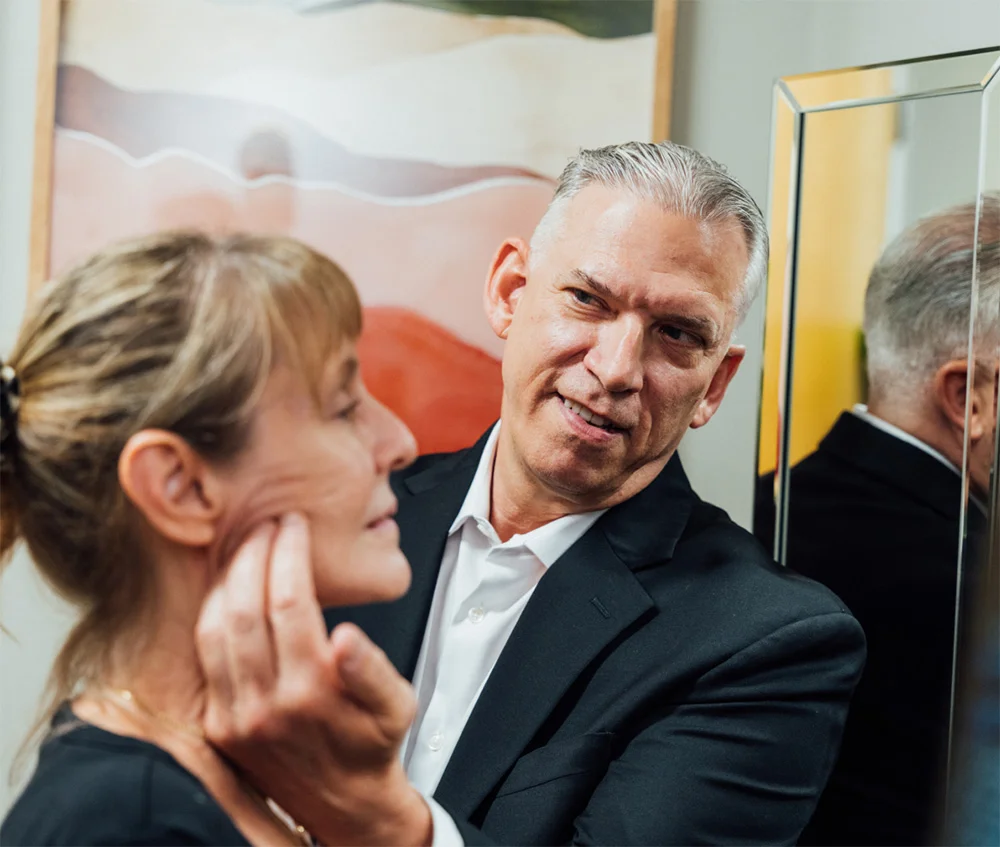
Dr. Lee in a black suit and white shirt consulting with a female patient. The patient is touching her cheek while the doctor looks toward the camera with a slight smile. A mirror and abstract artwork are visible in the background.

Head & Neck Skin Cancer Reconstruction Recovery

Your Guide to Post-Head & Neck Skin Cancer Reconstruction Care

Recovery after reconstruction depends on the extent of surgery. Mild swelling, bruising, and tenderness are common in the first week. Sutures are usually removed within 5–7 days, and most patients can return to normal daily activities soon afterward. More complex reconstructions may require a longer healing period, with gradual improvement over several weeks. Scars will continue to refine and fade over several months. Throughout recovery, you’ll attend follow-up visits to ensure the area is healing properly and that your cosmetic and functional results are progressing as expected.

How Much Does Head & Neck Skin Cancer Reconstruction Cost in Maryland?

The cost of Head & Neck Skin Cancer Reconstruction in Annapolis, Severna Park, and the rest of Maryland varies depending on the size of the defect, the reconstructive technique required, and whether the procedure is covered by insurance. Since this is considered reconstructive surgery and not elective cosmetic surgery, many cases are covered, either fully or partially, by health insurance. For patients without coverage, fees can range significantly, but a detailed cost estimate will be provided during your consultation. Our office also offers guidance on financing options when needed.

Why Choose Us?

A full-length image of two male doctors standing side-by-side in a stylish office or waiting area. Dr. Lee, on the right, is wearing a black suit and white shirt with his arms crossed. The other doctor, Dr. Washal, is on the left, wearing a light gray suit and white shirt with his hands clasped in front of him.

Head and neck reconstruction requires a unique blend of medical expertise and artistic talent. At Ann Arundel Facial Plastic Surgery, Dr. Brandon Wachal and Dr. Lee A. Kleiman is a board-certified surgeon with advanced training in facial plastic and reconstructive surgery. With years of experience helping patients recover after skin cancer treatment, they are dedicated to achieving results that restore function, minimize scarring, and achieve a natural appearance.

Head & Neck Skin Cancer (Mohs) Reconstruction FAQ’S

Trusted by
Patients

5.0

Dr. Wachal is a blessing to patients seeking facial rejuvenation and natural beauty enhancements.

His state-of-the-art, in-house surgical suite is fully equipped—even for emergencies—helping reduce patient costs without compromising safety or results. The office is immaculately hygienic and designed for comfort and care.

Schedule Your Consultation

If you’ve undergone skin cancer removal in Maryland and are concerned about the appearance or function of the treated area, reconstruction can help you heal with confidence. Contact Ann Arundel Facial Plastic Surgery today to schedule your consultation in Annapolis or Severna Park, and let our skilled team guide you through the next step in your recovery.